
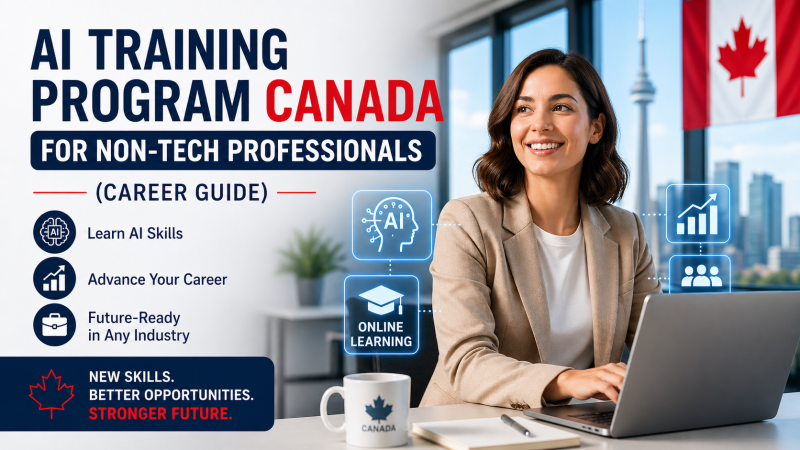
Artificial Intelligence (AI) is no longer just for programmers or data scientists. Today, business professionals, managers, accountants, marketers, and entrepreneurs are using AI tools to improve productivity, make smarter decisions, and grow their careers.
If you are from a non-technical background, this guide will help you understand:
- What an AI Training Program in Canada is
- Why AI skills are important for business professionals
- Which AI course in Canada is best for you
- Career opportunities after AI training
- How to get started step-by-step
What is an AI Training Program?
An AI training program in Canada is a structured course designed to teach you how to use artificial intelligence tools in real-world scenarios.
Unlike coding-heavy programs, modern AI certification for non-technical professionals focuses on:
- Practical AI tools (no coding required)
- Business use cases
- Automation and productivity
- Decision-making using AI
These programs are designed especially for people who:
- Do not have an IT background
- Want to upgrade their skills
- Are looking for better job opportunities
Why AI is Important for Business Professionals
AI is changing how businesses operate in every industry. Whether you work in finance, HR, marketing, or operations, AI can help you work smarter.
1. Increased Productivity
AI tools can automate repetitive tasks like:
- Data entry
- Email writing
- Report generation
2. Better Decision Making
AI helps analyze large amounts of data quickly, allowing professionals to make informed decisions.
3. Career Growth
Employers in Canada are actively looking for professionals with AI skills, even in non-technical roles.
4. Competitive Advantage
Professionals with AI knowledge stand out in the job market.
Who Should Take an AI Course in Canada?
An AI course for business professionals is ideal for:
- Office workers
- Managers and team leaders
- Accountants and finance professionals
- Marketing professionals
- HR specialists
- Entrepreneurs and small business owners
- Students and job seekers
You do NOT need:
- Coding experience
- Technical background
- Advanced math skills
Key Skills You Will Learn in an AI Training Program
A good AI training program in Canada focuses on practical skills. Here’s what you can expect:
1. Understanding AI Basics
- What is AI?
- How AI works in business
- Types of AI tools
2. AI Tools for Business Professionals
You will learn how to use tools for:
- Content creation
- Data analysis
- Customer service automation
- Business reporting
3. Prompt Engineering
Learn how to communicate effectively with AI tools to get better results.
4. Automation Skills
Use AI to:
- Automate daily tasks
- Improve workflows
- Save time
5. Real-World Business Applications
Apply AI in:
- Marketing campaigns
- Financial analysis
- HR processes
- Sales strategies
Top AI Tools for Business Professionals
Modern AI courses teach tools that are widely used in companies. Some popular AI tools for business professionals include:
- AI writing assistants
- Data analysis tools
- Chatbots for customer support
- Automation platforms
- Presentation and reporting tools
These tools help professionals:
- Work faster
- Reduce errors
- Improve output quality
Benefits of AI Certification for Non-Technical Professionals
Getting an AI certification for non-technical professionals offers many advantages:
1. Better Job Opportunities
Employers prefer candidates with modern digital skills.
2. Higher Salary Potential
AI skills can increase your earning potential.
3. Career Switch Opportunities
You can transition into roles like:
- Business analyst
- AI operations specialist
- Digital transformation consultant
4. Future-Proof Career
AI is the future. Learning it now secures your career.
AI Career Opportunities in Canada
After completing an AI course in Canada, you can explore various career paths:
Entry-Level Roles
- AI-enabled business assistant
- Data support analyst
- Marketing assistant using AI
Mid-Level Roles
- Business analyst
- Operations manager with AI skills
- AI project coordinator
Advanced Roles
- AI strategy consultant
- Digital transformation specialist
AI skills can be applied across industries such as:
- Finance
- Healthcare
- Retail
- Logistics
- Education
How to Choose the Right AI Training Program in Canada
Not all programs are the same. Here’s how to choose the best AI training program in Canada:
1. Focus on Non-Technical Learning
Choose a course designed for beginners and business professionals.
2. Practical Training
Look for programs that include:
- Hands-on exercises
- Real-world projects
3. Industry-Relevant Tools
Make sure the course teaches tools used in real businesses.
4. Flexible Learning Options
Options like:
- Online classes
- Hybrid learning
- Weekend batches
5. Certification
Choose a program that offers recognized certification.
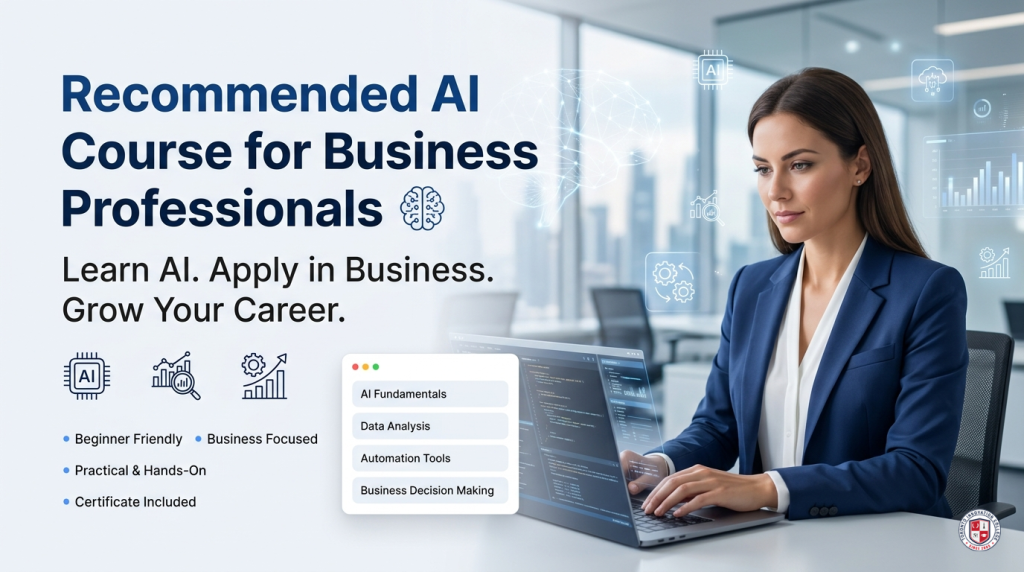
Recommended AI Course for Business Professionals
If you are looking for a practical and career-focused program, the AI course for business professionals offered by Toronto Innovation College is a strong option.
This program is designed specifically for:
- Non-technical learners
- Working professionals
- Students entering the job market
Why Choose This Program?
- Beginner-friendly curriculum
- Focus on real business use cases
- Hands-on AI tools training
- Flexible learning options
You can explore the course here:
AI Essentials for Business Professionals
About the Institution
Toronto Innovation College (legal name: Innovations in Business Solutions Inc.) is a registered career college under the Ontario Career Colleges Act, 2005.
This ensures:
- Quality education standards
- Industry-relevant curriculum
- Trusted certification
What You Will Learn in This AI Course
This AI course in Canada is structured to make learning simple and practical.
Module Highlights:
- Introduction to AI in business
- AI tools for productivity
- Automation techniques
- Data-driven decision making
- Real-world business case studies
Learning Format
The program is designed to suit busy professionals:
- Online learning options
- Hybrid (online + in-class)
- Flexible schedules
This makes it easier to:
- Learn while working
- Balance studies with personal life
How AI is Used in Different Business Functions
1. Marketing
- Content creation
- Social media automation
- Customer insights
2. Finance
- Expense analysis
- Forecasting
- Reporting automation
3. Human Resources
- Resume screening
- Employee engagement
- Training automation
4. Operations
- Process optimization
- Workflow automation
- Performance tracking
Step-by-Step Guide to Start Your AI Journey
Step 1: Understand Your Goals
Decide why you want to learn AI:
- Career growth
- Job switch
- Skill upgrade
Step 2: Choose the Right Course
Select a beginner-friendly AI training program in Canada
Step 3: Learn the Basics
Start with:
- AI concepts
- Basic tools
Step 4: Practice with Tools
Apply what you learn in real scenarios.
Step 5: Get Certified
Earn an AI certification for non-technical professionals
Step 6: Apply for Jobs
Update your resume and start applying.
Common Myths About AI Courses
Myth 1: AI is Only for Programmers
Reality: Many AI tools require no coding.
Myth 2: AI is Too Difficult
Reality: Beginner-friendly courses make it easy.
Myth 3: AI Will Replace Jobs
Reality: AI creates new opportunities and enhances roles.
Future of AI in Canada
Canada is becoming a global leader in AI innovation. Companies are investing heavily in AI technologies.
This means:
- More job opportunities
- Higher demand for AI-skilled professionals
- Growth across industries
Learning AI now puts you ahead in the job market.
Final Thoughts
AI is no longer optional—it is becoming a must-have skill for business professionals.
Whether you are:
- A student
- A working professional
- A career switcher
An AI training program in Canada can help you:
- Improve your skills
- Increase job opportunities
- Stay competitive in the market
If you are from a non-technical background, don’t worry. With the right course and guidance, you can easily learn and apply AI in your career.
Call to Action
Ready to upgrade your skills?
Explore the AI Course for Business Professionals and start your journey today